The real AI risk is inside the labs
▼Amodei in his latest blog post wrote a mix of agreeable things and things that I believe misrepresent where the real risk of AI is located. I want to focus my attention on why, among all the risks, open weight models constitute the mildest one. I write these words as a person who strongly believes AI may be very dangerous in the near future: 1. Exactly like what happened during the OpenAI / HF incident (which was a joke, but focus on the modalities, not the outcomes), the first serious AI incident is very likely to happen *inside* the walls of frontier AI labs, while testing a new model, or while the AI lab employees, or the few externals who have access, do something wrong compared to the expected power of the model.
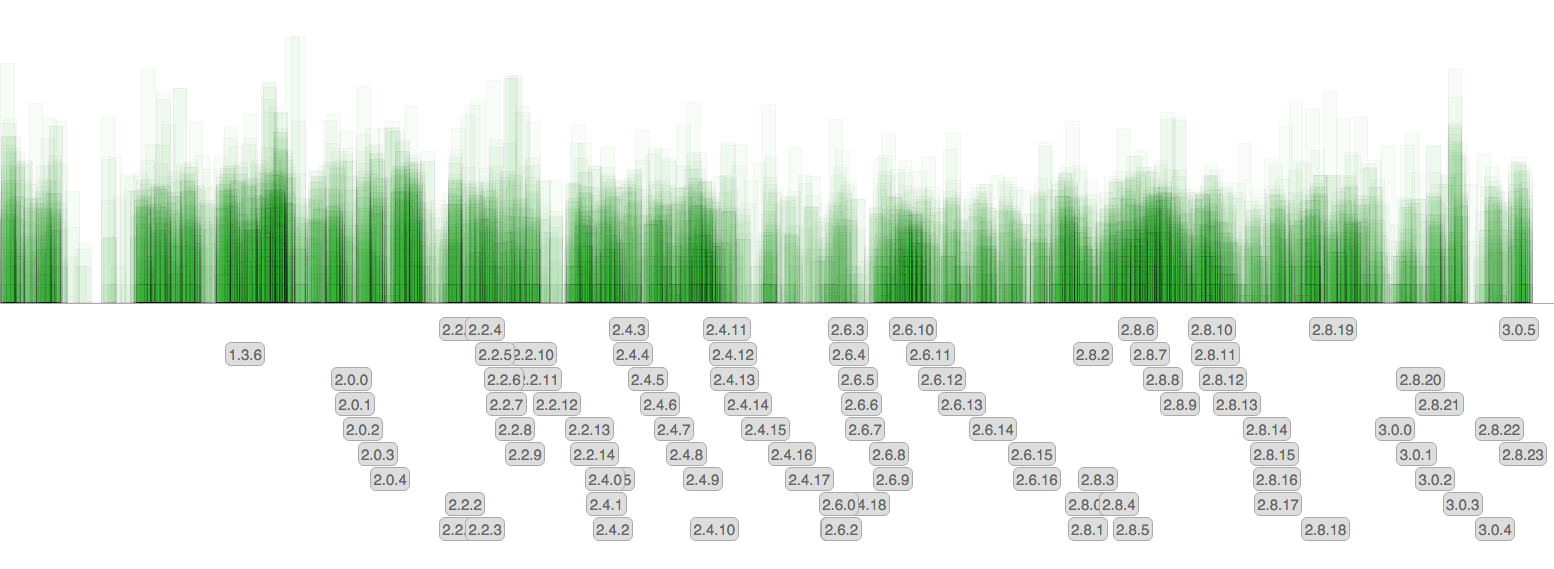 Each commit is a rectangle. The height is the number of affected lines (a logarithmic scale is used). The gray labels show release tags.
There are little surprises since the amount of commit remained pretty much the same over the time, however now that we no longer backport features back into 3.0 and future releases, the rate at which new patchlevel versions are released diminished.
Each commit is a rectangle. The height is the number of affected lines (a logarithmic scale is used). The gray labels show release tags.
There are little surprises since the amount of commit remained pretty much the same over the time, however now that we no longer backport features back into 3.0 and future releases, the rate at which new patchlevel versions are released diminished.